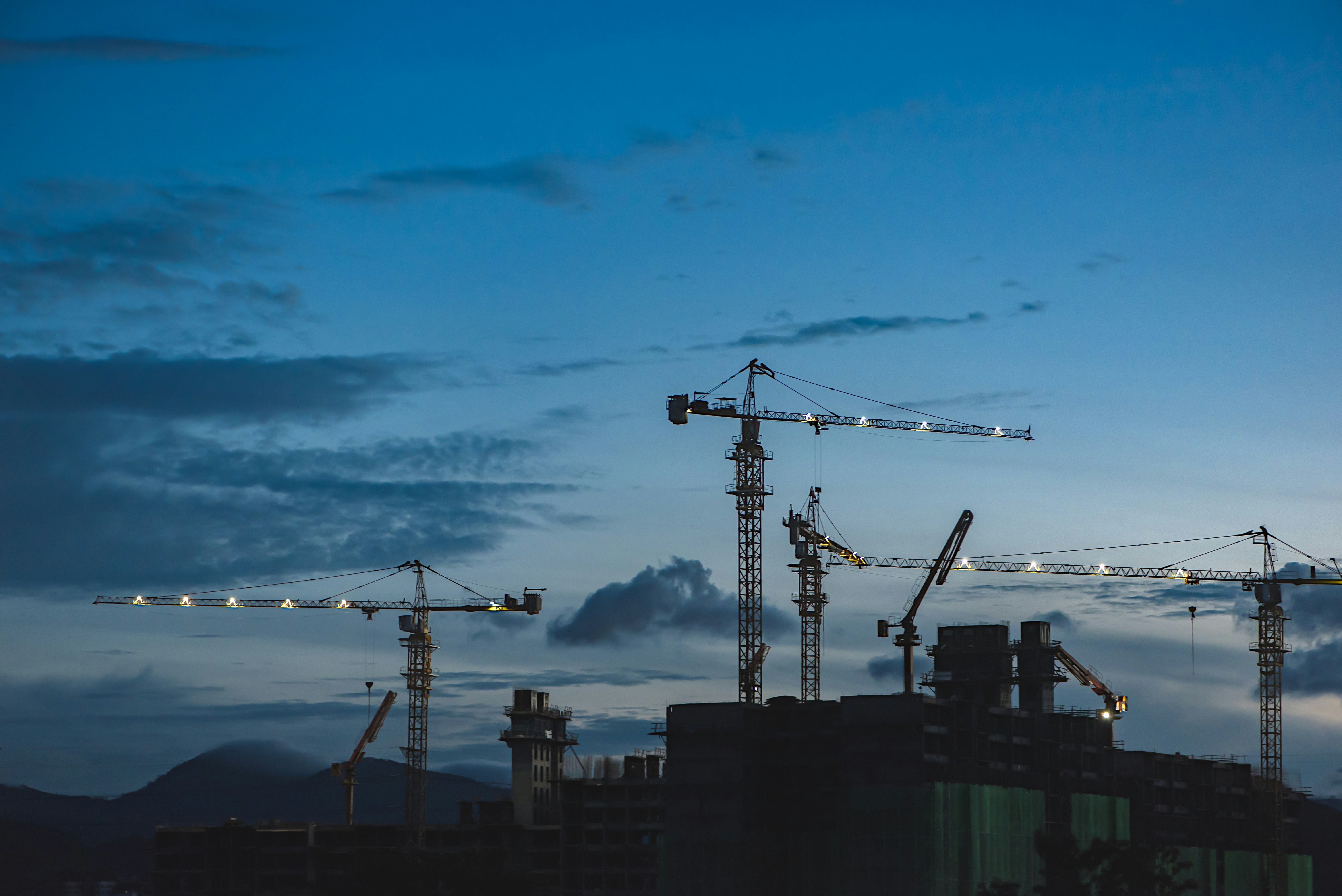
Why Foreign Investors Target Turkey's Construction Sector
Turkey's construction market offers a combination that is rare in emerging economies: a large and growing urban population, sustained government investment in infrastructure and urban renewal, an established legal pathway for foreign property ownership, and a citizenship-by-investment programme that has made Turkish real estate directly attractive to global high-net-worth buyers. For foreign developers, contractors, and real estate investors, this creates a demand base that extends well beyond domestic Turkish buyers.
Foreign participation in Turkey's construction and real estate market expanded significantly after 2012, when legislative changes removed the reciprocity requirement that had previously restricted foreign property ownership. This structural shift opened the market particularly to investors from the MENA region, who have since become the dominant foreign investor group in Turkish residential and mixed-use developments. Foreign developers have been most active in high-end residential projects, tourism-related developments, gated housing complexes, and coastal properties in metropolitan and Aegean regions.
Urban transformation has added another dimension to foreign investment interest. Turkey's large-scale renewal initiatives — replacing ageing building stock in earthquake-risk zones across major cities — have created project pipelines that extend across Istanbul, Ankara, Bursa, Izmir, and their surrounding regions. For foreign construction firms and developers with relevant technical capacity, these programmes represent substantial long-term opportunity.
Yet construction also sits at the more demanding end of Turkey's FDI landscape. Unlike manufacturing or many service sectors, a construction investment cannot be relocated. Once capital is committed to a project, it is embedded in a specific location, subject to that location's regulatory authorities, zoning decisions, and administrative practices. This spatial immobility makes foreign investors in construction more directly exposed to Turkey's institutional environment than investors in almost any other sector.
The Legal Framework for Foreign Investors in Construction
Turkey's formal investment regime is built on FDI Law No. 4875, enacted in 2003. Under this law, foreign investors are entitled to national treatment — the same legal standing as domestic investors. Profits can be freely transferred abroad, and the law provides formal protection against expropriation. Compared to many emerging markets, sectoral restrictions on foreign ownership in construction and real estate are limited.
For foreign companies operating in the construction sector, the key legal and regulatory frameworks to understand include:
Construction Permits and Zoning
Building permits in Turkey are issued at the municipal level. Zoning classifications, permitted floor area ratios, and land-use designations are governed by municipal plans that can be revised — sometimes while projects are underway. Before committing to a development site, investors need to verify the current zoning status, applicable density ratios, and any pending plan revisions at the relevant municipality.
Foreign Property Ownership
Since 2012, foreign nationals and foreign-owned companies registered in Turkey can acquire real property without the reciprocity restrictions that previously applied. Certain limitations remain — particularly near military zones and strategically designated areas — but for the majority of commercial and residential development locations, foreign ownership is legally straightforward. Title deed transactions are registered through the Land Registry Directorate (Tapu ve Kadastro Müdürlüğü).
Construction Company Licensing
Foreign companies wishing to undertake construction works in Turkey — as opposed to simply investing in real estate — typically need to establish a locally registered legal entity. Certain public procurement contracts and government tenders additionally require a Turkish-registered company with relevant technical capacity certificates (yeterlilik belgesi). The correct company structure is therefore not merely an administrative formality: it determines which contracts you can bid for and which regulatory relationships you can establish.
What Makes Construction Uniquely Challenging for Foreign Investors
Construction is one of the most institutionally embedded sectors in any economy. In Turkey, this institutional exposure is amplified by the multi-layered governance structure that a single construction project must navigate. A development in Istanbul, for example, may require approvals and interactions with:
- The metropolitan municipality (büyükşehir belediyesi) for zoning and master plan compliance
- The district municipality (ilçe belediyesi) for building permits and occupancy certificates
- The Land Registry Directorate for title deed transactions and cadastral records
- The Ministry of Environment, Urbanisation and Climate Change for projects above certain thresholds
- Environmental authorities for impact assessments where applicable
- Utility providers (electricity, water, gas) for infrastructure connections
- Cultural heritage authorities if the site is near a protected area or historic zone
Each of these authorities operates with a degree of administrative discretion. Requirements can be interpreted differently by different officials within the same body. Delays at any single layer can halt an entire project. For a domestic developer with established relationships across these bodies, this complexity is manageable. For a foreign investor who is new to the environment, it can be overwhelming — particularly when the regulatory landscape itself shifts during a project's lifecycle.
Unlike manufacturing or services, construction investments are spatially fixed and asset-specific. Once capital is committed, exit is costly and partial at best. Projects have long timelines — during which regulatory frameworks, macroeconomic conditions, and local administrative practices can all change. This combination of irreversibility, long duration, and local regulatory dependence makes construction the sector where institutional risk is felt most acutely by foreign investors in Turkey.
The Four Institutional Challenges Foreign Investors Face in Practice
The following challenges recur among foreign investors operating across Turkey's construction and real estate sector. They are not isolated incidents but structural features of the environment that well-prepared investors plan for from the outset.
Regulatory Opacity and Mid-Project Changes
Regulations governing zoning, density ratios, construction standards, and residency-linked investment conditions are subject to revision — sometimes during active projects. Feasibility studies and cost models built on a specific set of parameters can require complete revision when a municipal plan is updated or a sector-specific regulation changes. Compliance is not a one-time step but a continuous process throughout a project's lifecycle.
The Policy–Implementation Gap at Municipal Level
National investment policy provides formal protections, but implementation is highly decentralised. Municipalities and district offices exercise significant discretion over permit interpretation, inspection sequencing, and compliance requirements. The same regulation can be applied differently across two municipalities — or even two departments within the same municipality. Foreign investors unfamiliar with local bureaucratic culture experience this as unpredictability rather than flexibility.
Language Barriers and Administrative Exclusion
Almost all administrative procedures in Turkey's construction sector operate exclusively in Turkish. Official permit documents, zoning notices, compliance correspondence, and tax communications are rarely available in other languages. This creates a structural information asymmetry: foreign investors without Turkish-speaking operational support depend entirely on intermediaries to interpret both formal procedures and the informal practices that shape how those procedures actually unfold.
Financial Exposure Under Monetary Volatility
Construction projects require significant upfront capital and have long payback periods. In Turkey, foreign investors typically inject capital in foreign currency while revenues are generated in Turkish lira. Exchange-rate volatility, high interest rates, and inflation directly affect cost forecasting, financing structures, and return projections. Administrative delays compound this exposure: every month a permit is held up is a month of additional inflation risk on unearned revenue.
What Happens When Investors Are Underprepared
Foreign investors who enter Turkey's construction sector without adequate institutional preparation tend to follow a predictable trajectory. Initial projects encounter delays, cost overruns, or partnership difficulties. Adaptive strategies are deployed — but they are reactive rather than planned, and expensive in both time and money. Over time, institutional friction accumulates. The question shifts from how to grow to how to manage without losing more. The research on foreign investors in this sector identifies three common outcomes:
| Outcome | What It Looks Like | Primary Driver |
|---|---|---|
| Strategic Waiting | Completing existing projects while indefinitely postponing new investment decisions | Inability to form reliable cost or timeline forecasts due to regulatory and macroeconomic uncertainty |
| Partial Withdrawal | Selling construction assets, reducing headcount, shifting to less regulated activities | Accumulated losses from permitting delays, failed local partnerships, or enforcement inconsistencies |
| Full Exit | Relocating capital to other countries or sectors with more predictable institutional environments | Persistent institutional misalignment making long-term commitment untenable regardless of market opportunity |
These investors were not wrong about Turkey's construction opportunity. They were underprepared for Turkey's construction environment. The market potential they identified was real. What they lacked was the institutional infrastructure to realise it.
How Investors Who Succeed in Turkey's Construction Sector Are Set Up
Foreign investors who build lasting operations in Turkey's construction and real estate market share a consistent set of characteristics. They do not wait for the institutional environment to become frictionless — they build structures that absorb friction from the start. Four strategies consistently distinguish investors who grow from those who stagnate or exit.
-
Retain Dedicated Legal Counsel Before Signing Anything
Investors who navigate Turkey's construction regulatory environment successfully treat Turkish legal counsel not as an occasional resource but as a permanent operational partner engaged before the first transaction. "Without a lawyer and a financial advisor, you cannot survive here. It is not enough to read the law or follow procedures. Even advisors sometimes don't fully understand the rules because they change all the time. But without them, you are completely blind." In the Turkish construction context, legal advisors function as ongoing risk shields — reviewing every contractual and regulatory step, pre-empting compliance failures, and intervening when administrative processes stall.
-
Localise Your Organisational Structure
Foreign investors who reduced institutional friction systematically hired Turkish nationals in key operational, administrative, and managerial roles. This is not merely about having Turkish speakers on staff — it is about building organisational visibility and legitimacy within the local institutional environment. A company perceived as locally embedded tends to receive more straightforward treatment from permit offices, tax authorities, and municipal bodies than one that interacts with those bodies exclusively through foreign representatives or remote intermediaries.
-
Select and Vet Local Partners Through Professional Intermediaries
Local partnerships are often essential in Turkey's construction sector — for navigating municipal relationships, sourcing land, managing subcontracting chains, and accessing informal networks that accelerate approvals. But local partners are also one of the most significant sources of risk for foreign investors. "After our first bad partnership, we stopped choosing partners ourselves. We worked through advisory firms that have international experience. They take responsibility and are more careful because their reputation is at stake." Partner selection should never be informal. Investors who have sustained successful operations consistently route partner identification through professional intermediaries with verifiable track records.
-
Plan for Regulatory Variability, Not Regulatory Stability
Turkey's construction regulations — zoning classifications, density allowances, environmental requirements, residency-linked investment thresholds — have changed repeatedly and will continue to change. Investors who plan around the assumption of regulatory stability expose themselves to costly mid-project restructuring. Investors who build variability into their project structures from the start — through staged capital deployment, contractual flexibility clauses, shorter planning horizons, and regularly reviewed legal positions — are systematically better positioned to continue operating when the regulatory landscape shifts. "We don't need incentives. We need stability. Just give us clear rules for ten years and we can plan." Most investors in Turkey never get those ten years of clear rules. The ones who stay build structures that do not require them.
Financing Your Construction Investment in Turkey
Access to local financing has become one of the more challenging aspects of construction investment in Turkey for foreign-owned firms. High interest rates, strict collateral requirements, and currency risk have collectively reduced the viability of Turkish lira financing for capital-intensive, long-duration projects. In practice, most foreign investors in Turkey's construction sector rely predominantly on equity financing or foreign currency capital injections rather than local bank debt.
This has two practical implications. First, it increases foreign currency exposure: when costs are incurred in Turkish lira but capital is held in dollars or euros, exchange rate movements can materially affect project economics. Second, it means that cash flow management during permitting delays becomes critical — because every month of delayed approval is a month of carrying equity capital without revenue, while inflation continues to move against you.
Structuring your financing arrangements carefully at the outset — including how capital is injected into a Turkish entity, how inter-company loans are handled, and how repatriation of profits is planned — requires proper legal and tax advice from the point of company incorporation, not after first revenues are generated.
Incorporating the Right Company Structure for Construction Investment
The legal structure through which you operate in Turkey's construction sector shapes almost every aspect of your institutional experience: how you interact with permit offices, how you contract with local partners, how you access financing, how your tax obligations are structured, and how credible you appear to municipal authorities and government bodies.
Limited Liability Company (Ltd. Şti.)
The most commonly used vehicle for small-to-medium foreign construction investments. Requires minimum capital of TRY 50,000 (under Turkish Commercial Code No. 6102), can be established with a single shareholder, and carries limited personal liability. Administrative obligations are lower than a joint-stock company. Well-suited for real estate development, property holding, and smaller-scale construction operations where operational flexibility is valued over institutional scale.
Joint-Stock Company (A.Ş.)
Preferred by larger foreign investors and those seeking participation in public tenders, government urban transformation projects, or private sector contracts that require demonstrated capitalisation. Minimum capital of TRY 250,000 (under TCC No. 6102, effective 2024), minimum one shareholder. Carries greater institutional credibility with Turkish public bodies, banks, and large domestic counterparties. Required for certain regulated construction activities and for obtaining higher-tier technical capacity certificates needed for public procurement.
Beyond the choice of entity type, the decisions made at incorporation — share structure, management board composition, registered address, tax registration category, and authorised signatories — all have downstream consequences for how smoothly your company operates in Turkey's construction environment. These decisions are significantly easier and cheaper to get right at the start than to restructure under operational pressure.
Summary: What Foreign Investors in Turkey's Construction Sector Need to Know
Turkey's construction and real estate market offers genuine opportunity — urban growth, renewal demand, citizenship-linked real estate sales, and a formally liberal investment framework. Foreign investors from the MENA region, Europe, and Asia have built profitable long-term operations here.
The investors who struggle are not those who misjudged the market. They are those who underestimated the gap between Turkey's formal investment framework and the on-the-ground institutional environment that construction projects must navigate. That gap is real, persistent, and well-documented. It is also manageable — with the right legal structure, the right advisors, and the right company setup from day one.
- Engage Turkish legal and financial counsel before committing to any transaction.
- Choose your company structure based on the type of construction activity you plan — not just what is cheapest to set up.
- Localise your operational structure; Turkish-speaking management reduces institutional friction significantly.
- Vet all local partners through professional intermediaries with verifiable track records.
- Build regulatory variability into your project financial model — do not assume the rules in place at project initiation will remain unchanged at completion.
- Structure financing and capital injection carefully at incorporation; the tax and currency implications are easier to plan at setup than to fix later.
SetupTurkiye guides foreign investors through the full company incorporation process in Turkey — from selecting the right entity type to completing registration, tax setup, and bank account opening. We work with investors in construction, real estate development, infrastructure, and related sectors. Get in touch →