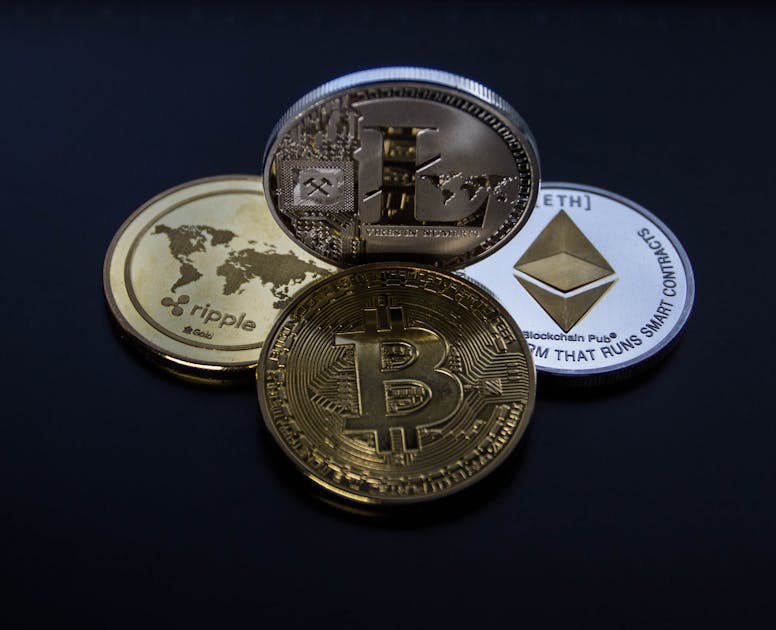
The Core Question: Cash or In-Kind Capital?
When forming a company in Turkey, founders must fulfil a capital contribution obligation. Under the Turkish Commercial Code (TTK No. 6102), capital can be contributed in two forms: cash capital (nakdi sermaye) — money paid in Turkish Lira — or in-kind capital (ayni sermaye) — non-monetary assets with a measurable economic value.
This distinction is the legal pivot on which the entire cryptocurrency question turns. Cryptocurrencies are not recognised as fiat currency under Turkish law, which means they cannot be contributed as cash capital. However, they can — and do — qualify as in-kind capital, provided the statutory requirements are met.
Cryptocurrencies cannot be used as cash (fiat) capital in Turkey, but they can be contributed as in-kind (non-cash) capital in an A.Ş. (Joint Stock Company) under TTK Articles 342 and 343 — subject to expert valuation and proper custody procedures.
Why Crypto Is Not Cash Capital
Turkish law — both the Civil Code and the Commercial Code — treats money as legal tender issued by a central bank. The Turkish Central Bank is the sole authority to issue the Turkish Lira, and only fiat currencies qualify as monetary capital under Turkish company law.
This is reinforced by the 2021 Regulation on the Non-Use of Crypto Assets as Payment Instruments, which explicitly prohibits using cryptocurrencies to settle payments for goods and services in Turkey. While this regulation does not address company formation directly, it reflects the legislative position that crypto does not hold the legal status of money in Turkey.
Swiss law — from which Turkey's joint stock company provisions are largely derived — takes the same approach. Switzerland's Zug Canton Trade Registry, which has been registering crypto-capitalised companies since 2017 in what is now known as "Crypto Valley", likewise treats crypto as in-kind capital rather than cash.
Cryptocurrency as In-Kind Capital: The Legal Case
For an asset to be accepted as in-kind capital in a Turkish A.Ş., it must satisfy all of the following criteria under TTK Article 342:
| Requirement | Does Crypto Satisfy It? |
|---|---|
| Constitutes a property asset (malvarlığı unsuru) | Yes — cryptocurrencies have market value and are widely traded |
| Has a determinable monetary value (nakden değerlendirilebilir) | Yes — active exchanges provide transparent, real-time prices |
| Is transferable (devredilebilir) | Yes — transfer occurs via blockchain transaction |
| Free of liens, attachments, and encumbrances | Verifiable on a case-by-case basis |
| Not a personal service, personal labour, commercial reputation, or unmatured receivable | Correct — crypto is none of these |
Academic consensus in Turkish law, supported by comparative analysis with Swiss law, concludes that payment tokens (Bitcoin, Ether, and comparable cryptocurrencies) satisfy all statutory criteria for in-kind capital under TTK Articles 128, 342, and 343.
The TTK's catch-all provision — "any transferable and monetarily assessable value" — was introduced in 2012 precisely to accommodate novel asset classes not yet foreseen by the legislature. Digital assets with measurable market value fall squarely within this description.
Practical Steps: How to Contribute Crypto Capital in Turkey
Because crypto is treated as in-kind capital, the formation process follows the qualified incorporation (mevsuf kuruluş) rules under the TTK. These are stricter than standard company registration in Turkey and involve additional disclosure and verification steps.
- Specify the crypto in the articles of association. The articles must identify the cryptocurrency being contributed (name, ticker, amount), the number of shares it is exchanged for, and where it is held (wallet address or platform).
- Obtain a court-appointed expert valuation. Under TTK Article 343, the incorporation court must appoint an independent expert to determine the monetary value of any in-kind capital. For cryptocurrencies, the expert references the asset's market price on reputable exchanges at a defined date.
- Transfer the crypto to a secure custodian before registration. The asset must be placed in custody prior to Trade Registry registration. The legally safest method is to create a dedicated cold (offline) hardware wallet for the new company and transfer the funds there, with the wallet held by a trusted third party — ideally a regulated crypto asset service provider.
- File the in-kind capital declaration. The founders' declaration (kurucu beyanı) must disclose full details of the contribution — including the crypto asset's name, custody arrangement, and valuation basis — and be appended to the articles of association.
- Register with the Trade Registry. Submit all documentation, including the expert report and founders' declaration, to the relevant Trade Registry Directorate for formal registration.
Because cryptocurrency prices fluctuate, the expert's valuation should be performed as close to the registration date as possible. The valuation date must be clearly stated in the expert report, and the articles of association should reflect the value at that date.
The Custody Problem — and Its Solution
One of the most practical challenges with crypto as capital is how to secure it between the time of the founders' contribution and the company's formal registration — a window that can span several days in Turkey.
Turkish law requires in-kind assets to be placed in custody with a "trusted person" pending registration. For cryptocurrencies held in a hot (online) wallet on a centralised exchange, the platform itself can serve as custodian by confirming the balance is blocked and noting it in the founders' declaration.
For a cold wallet, the hardware device and its private key should be deposited with a notary or entrusted to an independent third party, such as a regulated crypto asset service provider. This is the more secure option and is aligned with how Turkish law handles other movable in-kind assets such as bearer securities.
How Switzerland Has Already Handled This
Turkey's joint stock company framework was modelled closely on the Swiss Code of Obligations (Obligationenrecht), so Swiss practice provides a useful benchmark for how crypto capital can work in Turkey.
Since 2017, numerous companies — particularly in the fintech and blockchain space — have been successfully registered in Switzerland with cryptocurrency as in-kind capital. The Zug Canton Trade Registry (in Switzerland's "Crypto Valley") pioneered the process and issued a guidance note confirming that crypto contributions are treated as in-kind assets subject to standard expert valuation requirements.
Switzerland's approach mirrors what Turkish law already permits: crypto is valued by an independent auditor by reference to active exchange prices, disclosed in the founding documents, and transferred to the company's designated wallet before registration.
The Volatility Challenge
The most commonly raised concern about crypto as company capital is price volatility — the risk that the asset loses significant value between the date of the expert's valuation and the company's actual operations.
This concern is real but not unique to crypto. The same issue arises when in-kind capital takes the form of listed shares, foreign currency, precious metals, or commodities. Turkish company law already handles this through the capital protection (sermayenin korunması) provisions of the TTK, which apply uniformly to all in-kind assets.
For founders who wish to avoid this uncertainty entirely, stablecoins — cryptocurrencies pegged to a fiat currency such as the US Dollar — offer a middle path. Stablecoins are still not fiat money, so they still require the in-kind capital route, but their price stability makes valuation straightforward and dramatically reduces the post-formation risk.
International and Turkish accounting standards have not yet established a unified framework for recognising and measuring crypto assets on corporate balance sheets. Until TFRS (Turkish Financial Reporting Standards) or the relevant IFRS guidance settles this, companies should work closely with their auditors to determine the most appropriate accounting treatment — typically either as an intangible asset or as inventory, depending on the company's use of the asset.
The Regulatory Gap
As of the time of writing, Turkey has no dedicated secondary legislation specifying how trade registry directorates should process crypto capital contributions. No company in Turkey has yet been formally registered with cryptocurrency as its capital.
This does not mean it is legally impossible — the TTK's existing in-kind capital framework is sufficient. It does mean, however, that the practical process may require additional engagement with the relevant Trade Registry Directorate, and that individual registrars may apply different standards until formal guidance is issued.
Legal reform is expected. Turkey's ongoing crypto asset legislation — parallel to the EU's MiCA framework — is likely to eventually address this gap. In the meantime, the Swiss experience and the clear logic of TTK Article 342 provide a strong foundation for proceeding.
Which Companies Can Use Crypto Capital?
The in-kind capital rules under TTK Article 342 apply to joint stock companies (Anonim Şirket / A.Ş.). In theory, they also apply to Limited Liability Companies (Ltd. Şti.) via TTK Article 127, though the practical and legal analysis for the Ltd. Şti. involves some additional considerations.
If your goal is to incorporate a crypto-capitalised company in Turkey, the A.Ş. is the more suitable vehicle — it offers greater structural flexibility, no cap on shareholders, and aligns more directly with the Swiss precedents that provide guidance here.
Founders in the blockchain, Web3, fintech, or DeFi sectors who hold significant crypto assets and wish to deploy them as capital — rather than converting to fiat first — are the primary audience. It is also relevant for foreign investors incorporating in Turkey who hold non-fiat assets and want to use them directly.
Summary: What Is Allowed, What Is Not
| Scenario | Permitted? | Basis |
|---|---|---|
| Crypto as cash capital (nakdi sermaye) | No | Crypto is not legal tender under Turkish law |
| Crypto as in-kind capital (ayni sermaye) in an A.Ş. | Yes | TTK Arts. 342, 343 — all criteria satisfied |
| Stablecoin as in-kind capital | Yes | Same as above — lower volatility risk |
| NFT as in-kind capital | Case-by-case | Must satisfy all TTK Art. 342 criteria individually |
| Using crypto to pay the trade registry fee | No | 2021 Regulation prohibits crypto as payment instrument |
Frequently Asked Questions
Can I use Bitcoin as capital to form a company in Turkey?
Yes — as in-kind capital. Bitcoin satisfies all the statutory requirements for in-kind capital under the Turkish Commercial Code: it has measurable monetary value, is freely transferable on the blockchain, and is not a personal service or unmatured receivable. It cannot, however, be contributed as cash capital, since it is not legal tender.
Does Turkey have specific regulations on crypto company capital?
Not yet. The existing in-kind capital rules of the TTK are sufficient in principle, but no secondary legislation has been issued to clarify the trade registry procedure for crypto contributions. This regulatory gap means the process currently requires careful legal preparation.
How is the cryptocurrency valued for company formation purposes?
A court-appointed independent expert determines the value by reference to the crypto asset's market price on active exchanges at a date as close to registration as possible. Because major cryptocurrencies (Bitcoin, Ether, etc.) trade on transparent, liquid markets, this valuation is typically more straightforward than for illiquid in-kind assets such as IP rights or real estate.
What happens if the crypto loses value after incorporation?
Once the asset is transferred to the company as capital, the company bears the economic risk. If the value falls below the registered capital amount, the capital protection provisions of the TTK — the same provisions that apply to share price drops or currency devaluations in FX-denominated capital — govern the company's response obligations.
Is it better to convert crypto to cash before incorporating?
From a purely procedural standpoint, cash incorporation in Turkish Lira is simpler and faster. If the cost and friction of currency conversion are not significant concerns, that remains the path of least resistance. However, if you hold substantial crypto assets and wish to deploy them directly into a Turkish entity without first cashing out — potentially triggering tax events — the in-kind capital route is worth the additional steps involved.